
Most people who struggle with productivity are not lacking motivation or discipline. They are lacking a system — a consistent external structure that organizes their commitments, allocates their attention, and reduces the moment-to-moment cognitive load of deciding what to work on next. GTD, the Pomodoro Technique, and time blocking are the three productivity systems with the broadest adoption and the most substantial bodies of practitioner experience behind them. Each solves a real problem; each creates a different set of tradeoffs. Understanding what each system actually does — mechanically, psychologically, and neurologically — is the prerequisite for choosing the one most likely to work for your specific work type, cognitive style, and professional context.
Why Productivity Systems Matter — and Why Most People Use None
The case for using a productivity system rests on a simple but important finding from cognitive psychology: decision-making consumes cognitive resources, and those resources are finite. Every time a knowledge worker decides what to work on next — from scratch, in the moment, without a pre-committed plan — they expend prefrontal capacity that could have been directed at the work itself. Roy Baumeister's research on ego depletion, and subsequent work by researchers including Shai Danziger (whose study of Israeli parole judges found that approval rates dropped from 65% to nearly zero as decision fatigue accumulated through the day), suggests that the quality of in-the-moment decisions degrades as the day progresses.
A productivity system offloads these decisions to an earlier, less depleted version of yourself — the version that planned the week on Sunday, or the version that set up tomorrow's schedule the evening before. The system does not make you work harder; it makes the cognitive cost of working lower, by eliminating the ongoing decision of what to do next and replacing it with a pre-committed answer.
Yet surveys of knowledge workers consistently find that the majority operate without any consistent productivity system — managing their commitments through a combination of email inboxes, mental notes, and reactive to-do lists. The research on decision fatigue makes the cost of this approach predictable: the most cognitively demanding, highest-value work tends to be displaced by the reactive stream of whatever arrives most recently or feels most urgent, because choosing to do the important work requires more cognitive effort than responding to the urgent work.
The Cost of No System
David Allen, creator of GTD, estimates that the average knowledge worker has between 30 and 100 open loops — uncommitted tasks, projects, and obligations — stored in their head at any given time. Research on the Zeigarnik effect shows that each of these open loops occupies a small but non-zero amount of working memory, producing a persistent background cognitive load that reduces available capacity for focused work. A functional productivity system closes these loops by capturing them in a trusted external system — freeing the working memory they were occupying and reducing the diffuse anxiety that accompanies a mind full of unresolved commitments.
Getting Things Done (GTD): The Capture-and-Process System
David Allen published Getting Things Done in 2001, and it remains the most comprehensive productivity system ever devised for managing complex, multi-project knowledge work. GTD's core insight is that the human mind is poorly designed for storing and tracking commitments — it is better used for thinking than for remembering — and that a trusted external system for capturing and organizing all commitments dramatically reduces cognitive load and anxiety.
The GTD system operates through five stages. Capture: everything that has your attention — tasks, ideas, obligations, projects — is collected into inboxes (physical, digital, or both) as soon as it arises, removing it from working memory. Clarify: each item in the inbox is processed to determine what it is and what the next action is. Allen's two-minute rule — if an action takes less than two minutes, do it immediately — applies here. Organize: clarified items are sorted into a structured reference system: a next-actions list organized by context, a projects list, a waiting-for list (things delegated to others), a someday/maybe list, and a calendar for date-specific commitments. Reflect: the system is reviewed regularly — daily for next actions, weekly for the full system — to maintain currency and keep the trusted external system actually trustworthy. Engage: work from the system rather than from memory or reactive impulse.
GTD's strength is its completeness. It handles every type of commitment — projects, single actions, waiting items, reference material, future possibilities — through a coherent framework. Its weakness is its complexity: the full GTD system requires significant setup time, consistent maintenance, and a genuine commitment to the weekly review. Research on GTD adoption rates finds that many practitioners implement parts of the system effectively but struggle to maintain the full weekly review that keeps the system trusted and current. A partially maintained GTD system is often less effective than a simpler system maintained consistently, because the value of GTD depends on the completeness of its capture and the currency of its organization.
The Psychological Core of GTD
Allen's framework rests on a psychological claim that has since been supported by research: the mind experiences relief when open loops are closed or externalized. A 2011 study by E.J. Masicampo and Roy Baumeister published in the Journal of Personality and Social Psychology found that making specific plans for unfinished tasks — writing down what the next step is and when it will happen — produced the same reduction in intrusive thoughts about those tasks as actually completing them. This finding directly validates GTD's capture-and-clarify mechanism: the act of writing down a task and defining its next action is psychologically equivalent to completing it in terms of its cognitive load reduction.
The Pomodoro Technique: The Time-Box System
Francesco Cirillo developed the Pomodoro Technique in the late 1980s while a university student, using a tomato-shaped kitchen timer (pomodoro is Italian for tomato) to structure his study sessions. The technique is structurally the simplest of the three systems: work is divided into 25-minute focused intervals (pomodoros), each followed by a 5-minute break. After four pomodoros, a longer break of 15 to 30 minutes is taken. All interruptions during a pomodoro are either deferred (internal interruptions are noted for later; external ones are negotiated away) or the pomodoro is voided and restarted.
The Pomodoro Technique solves a specific and common problem: the inability to begin or sustain focused work on tasks that feel overwhelming or aversive. By reducing the commitment to "I will work on this for 25 minutes" rather than "I will finish this project," it lowers the psychological barrier to starting. Research on task initiation by Timothy Pychyl at Carleton University, whose work on procrastination consistently identifies aversion to the negative emotion associated with a task as the primary driver of delay, suggests that the Pomodoro's time-boxing directly targets this mechanism: the task no longer requires tolerating an indefinite stretch of discomfort, just 25 minutes of it.
The technique also provides a natural measurement unit for the day. Tracking the number of pomodoros completed per day on a given project provides a concrete, gameable metric of focused work that is independent of output quality — useful for building the consistency habit before worrying about output optimization. For the research on habit loops, the pomodoro timer functions as a reliable cue, the work interval as the routine, and the break as the reward — a clean three-part loop that is easy to habitualize.
What Pomodoro Does Not Solve
The Pomodoro Technique's weakness is that it addresses the micro-level of work — how to sustain focus within a session — without addressing the macro-level of what to work on and when. A practitioner using only the Pomodoro Technique may complete many focused 25-minute intervals on the wrong tasks, or may lack a system for managing the commitments and projects that accumulate around their focused work. Pomodoro is a focus tool, not a comprehensive work management system. It is most effective when combined with either GTD (for managing what to work on) or time blocking (for deciding when to work on what).
Time Blocking: The Calendar-as-Commitment System
Time blocking, described in depth in our dedicated guide on the time blocking method, operates at the level of the daily schedule rather than at the level of task management or focus intervals. Its core mechanism is pre-commitment: specific types of work are assigned to specific calendar blocks in advance, converting the daily schedule from a reactive field into a designed structure that reflects genuine priorities.
Where GTD asks "what is everything I need to do, and what is the next action for each?" and Pomodoro asks "how do I sustain focus for the next 25 minutes?", time blocking asks "when, specifically, will each category of important work happen today?" The three questions are complementary, and the most robust productivity systems typically combine elements of all three.
Time blocking's unique contribution is the protection of high-value work from reactive displacement. In the absence of scheduled blocks, the most important work tends to be perpetually deferred because responding to whatever arrives most recently always feels more immediately necessary. A scheduled deep work block converts the important-but-not-urgent work into an appointment with yourself — one that carries the same commitment weight as an external meeting. Research on implementation intentions by Peter Gollwitzer shows that this specific-when-and-where commitment format is among the most powerful predictors of follow-through on intended behavior.
What the Research Says About Each System
Rigorous comparative research specifically testing GTD, Pomodoro, and time blocking against each other is limited — productivity systems are difficult to study in controlled conditions because their effectiveness depends heavily on implementation fidelity, individual differences, and work type. However, the research on the underlying mechanisms each system targets provides a basis for evidence-informed comparison.
GTD is best supported by the research on cognitive load and working memory. The Masicampo and Baumeister study directly validates the capture-and-plan mechanism. Research on "mind like water" — the GTD metaphor for a mind free of stored commitments — aligns with findings on the Zeigarnik effect and the cognitive cost of open loops. The system's comprehensive scope makes it well-suited to complex knowledge work with many concurrent projects and irregular task streams.
The Pomodoro Technique is best supported by research on task initiation, procrastination, and the psychological effect of time constraints. A 2017 meta-analysis on time pressure and performance published in Psychological Bulletin found that moderate time pressure improves performance on routine and moderately complex tasks by increasing focus and reducing mind-wandering. The 25-minute constraint creates exactly this moderate time pressure. For tasks where the primary obstacle is beginning rather than sustaining, the Pomodoro mechanism is highly targeted.
Time blocking is best supported by research on implementation intentions, decision fatigue, and the cost of reactive work management. The Gloria Mark research documenting the fragmented workday provides the problem diagnosis; the Gollwitzer meta-analysis on implementation intentions provides the solution mechanism. The system is most effective for work where the primary obstacle is protecting focused time from reactive displacement, rather than managing task complexity or overcoming initiation resistance.
Strengths and Weaknesses Side by Side
GTD
Strengths: Most comprehensive system for managing complex, multi-project work. Dramatically reduces cognitive load through externalizing commitments. Handles every type of input — tasks, projects, reference, waiting items — through a coherent framework. The weekly review creates a reliable system-maintenance rhythm. Best fit for roles with high task variety and many concurrent projects.
Weaknesses: High setup complexity and ongoing maintenance requirement. Full implementation takes weeks to establish. The system's value depends entirely on the weekly review — without it, the system becomes outdated and untrustworthy quickly. Does not directly address the scheduling question of when to do what. Can become a sophisticated procrastination tool if organizing the system substitutes for doing the work.
Pomodoro Technique
Strengths: Lowest barrier to adoption of the three systems — can be started immediately with nothing more than a timer. Directly targets procrastination and task-initiation resistance. Provides a clear, gameable daily metric (pomodoros completed). The forced break structure prevents the cognitive fatigue that accumulates during extended uninterrupted work. Best fit for work where starting is the primary obstacle, or for people building focused-work habits for the first time.
Weaknesses: The 25-minute interval may be too short for deep work that requires extended warm-up periods — some complex cognitive tasks do not reach full productive depth until 20 to 30 minutes in, leaving only a few minutes of peak engagement before the timer interrupts. Does not address task selection or scheduling. The rigid interval structure can feel artificially constraining for experienced practitioners who have developed reliable self-monitoring of their own focus states.
Time Blocking
Strengths: Best system for protecting high-value work from reactive displacement. Directly addresses the scheduling question — not just what to do but when. Creates a daily structure that reflects genuine priorities rather than reactive urgency. Pairs naturally with a weekly planning rhythm. Best fit for roles where the primary productivity obstacle is calendar fragmentation and reactive work displacement.
Weaknesses: Requires a weekly planning session and daily scheduling ritual to maintain — moderate ongoing effort. Does not address task management complexity (what GTD solves) or focus initiation resistance (what Pomodoro solves). Susceptible to collapse when the day's actual demands diverge significantly from the planned schedule — requires the discipline to rebuild rather than abandon the schedule when disruptions occur.
Which System Fits Your Work Type
The most honest answer to "which system is best?" is that it depends on the primary obstacle between you and your highest-value work. Different work types and professional contexts have different primary obstacles, and matching the system to the obstacle produces better results than adopting the most popular or most sophisticated system regardless of fit.
Use GTD if: you manage many concurrent projects with irregular task streams, you experience persistent anxiety about forgotten commitments, your work involves high task variety across multiple domains, or you find yourself frequently surprised by deadlines and obligations. GTD's comprehensive capture-and-organize framework directly addresses these symptoms by externalizing the tracking burden.
Use Pomodoro if: your primary obstacle is starting rather than sustaining, you frequently defer difficult or aversive tasks in favor of easier work, you are building a focused-work habit for the first time, or you work on tasks where 25-minute intervals represent meaningful units of progress. Pomodoro is also particularly effective for students, writers, and programmers whose work can be naturally divided into focused sessions.
Use time blocking if: your calendar is fragmented by meetings and reactive work, your most important work is consistently displaced by urgent but lower-value tasks, you have predictable recurring work types that benefit from dedicated scheduling, or you find that you know what your highest-value work is but consistently fail to find time for it. Time blocking directly addresses the calendar-fragmentation problem that GTD and Pomodoro do not solve. It pairs naturally with the single-tasking discipline to produce the conditions for deep, uninterrupted output.
The Case for Combining Systems
Many of the most effective knowledge workers use a combination of all three systems at different levels of their work structure. A typical hybrid: GTD at the capture-and-organize level (managing the full inventory of commitments and projects), time blocking at the scheduling level (deciding when each category of work happens), and Pomodoro at the execution level (managing focus within individual work sessions, particularly for tasks with high initiation resistance). Each system operates at a different level of granularity, and they complement rather than compete with each other when used appropriately.
How to Choose and Implement Your System
Action Steps
Common Misconceptions About Productivity Systems
Misconception 1: The Right System Will Make You Productive Without Effort
Productivity systems reduce the cognitive overhead of deciding what to do, protect focused work from reactive displacement, and create the conditions for high-quality output. They do not replace the effort the work itself requires, nor do they compensate for insufficient skill, unclear goals, or chronic sleep deprivation. The most well-designed productivity system implemented by someone who does not know what their highest-value work is, or who is too fatigued to think clearly, will not produce meaningful improvement. Systems are amplifiers of directed effort, not substitutes for it.
Misconception 2: You Should Use the System That Works for Successful People
The productivity system used by a successful person is optimized for their specific work type, cognitive style, professional context, and existing habits — not for yours. Elon Musk's time-blocking in five-minute increments is optimized for a CEO managing multiple companies through back-to-back meetings; it is not a model for a novelist, a researcher, or a teacher. David Allen's GTD is optimized for complex, multi-project executive work; it may be significant overkill for someone with a small number of recurring responsibilities. The question is not "what does a successful person use?" but "what does my work actually require?"
Misconception 3: Switching Systems When Results Plateau Means the System Failed
Many practitioners abandon a working system when results plateau, interpreting the plateau as evidence that the system has stopped working. More often, the plateau reflects that the system has solved its primary problem — the initial gains from addressing the primary obstacle have been realized — and further improvement requires addressing a secondary obstacle that a different system targets. The appropriate response to a productivity plateau is not to replace the system but to diagnose the new primary obstacle and add a complementary tool. This mirrors the principle in Atomic Habits: when a habit stops producing visible improvement, the solution is usually to layer an additional habit, not to abandon the one that is already working.
Misconception 4: Digital Tools Are Better Than Analog Ones for Productivity Systems
The evidence for this claim is weak. Research on note-taking by Pam Mueller and Daniel Oppenheimer at Princeton found that handwriting produces better conceptual encoding than typing — a finding that extends to task planning, where the physical act of writing a schedule or task list appears to increase commitment and attention more than typing the same content. Many of the most experienced GTD and time blocking practitioners use paper-based systems, citing lower friction, fewer distractions, and higher reliability than digital tools. The best tool for any productivity system is the one you will actually use consistently — and for many people, the simplicity and tangibility of paper reduces both setup friction and system abandonment.
Conclusion
GTD, Pomodoro, and time blocking are not competing answers to the same question. They are answers to three different questions: what do I need to do and what is the next action for each (GTD), how do I start and sustain focused work on difficult tasks (Pomodoro), and when will my most important work actually happen today (time blocking). Understanding which question your work most urgently needs answered is the basis for choosing the right starting system.
The research on cognitive load, task initiation, decision fatigue, and implementation intentions supports the underlying mechanisms of all three systems. None of them works through magic or motivation; all of them work by reducing the cognitive overhead that reactive, unstructured work management imposes, and by creating the structural conditions that focused, high-quality cognitive output requires.
Start with the minimum viable version of the system that matches your primary obstacle. Maintain its core ritual for four weeks. Measure what changes. Then iterate. The best productivity system is the one you actually use — and that criterion narrows the field considerably.
Recommended Reading
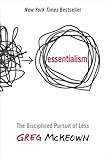
The three foundational texts are David Allen's Getting Things Done for the GTD system, Francesco Cirillo's The Pomodoro Technique (available free on his website) for the time-box system, and Cal Newport's Deep Work for the time blocking philosophy. For implementation of any of these systems as sustainable habits, Atomic Habits by James Clear provides the behavioral design framework that makes the difference between a system you try and a system you keep.
External Resources
- Masicampo & Baumeister — Unfulfilled Goals Interfere With Tasks That Require Executive Functions, Journal of Experimental Social Psychology (2011)
- Rubinstein, Meyer & Evans — Executive Control of Cognitive Processes in Task Switching, Journal of Experimental Psychology (2001)
- Francesco Cirillo — The Pomodoro Technique: Official Resource and Free Guide
📚 Recommended Reading



Affiliate links — we may earn a small commission at no extra cost to you.