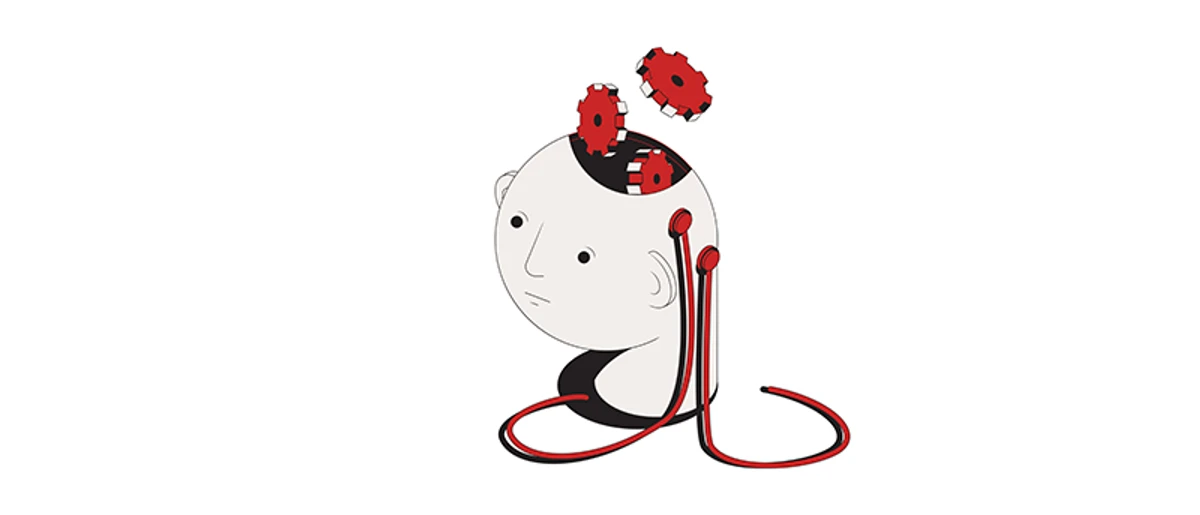
Self-control is one of the most studied and most misunderstood variables in human psychology. Most people think of it as willpower — a finite reserve of mental strength that you either have or you burn through. The science tells a far more useful story: self-control is a set of skills, systems, and environmental arrangements that can be deliberately designed. Understanding what the research actually says changes how you approach every challenge of behavior change — from diet and exercise to deep work and long-term financial discipline.
What Self-Control Actually Is
Psychologists define self-control as the capacity to regulate one's thoughts, emotions, and behaviors in the service of long-term goals — overriding short-term impulses when they conflict with those goals. It is not a single trait but a family of related capacities: inhibiting automatic responses, delaying gratification, resisting temptation, persisting through difficulty, and regulating emotional responses that would otherwise derail goal-directed behavior.
This distinction matters enormously for how you try to improve it. If self-control were a fixed personality trait, you'd either have it or you wouldn't. If it were simply willpower — a raw mental force — you'd try to generate more of it through motivation and grit. But if it is a set of skills and systems, the path to improvement looks entirely different: you study how those skills work, what undermines them, what supports them, and how to build systems that make good behavior automatic rather than effortful. The latter is what the research supports, and it is far more actionable. This systems perspective connects directly to what we explored in why discipline beats motivation — the goal is never to rely on feeling; it's to design behavior so feeling becomes irrelevant.
The Self-Control Paradox
People with the highest measured self-control don't actually report exerting more willpower — they report encountering fewer temptations. This is the paradox at the heart of the science: the people who are best at self-control are best at it partly because they've arranged their lives so they rarely need to use it in its most effortful form. They're not resisting more; they're designing environments where resistance is rarely required. This is the practical insight that most self-help accounts of willpower completely miss.
The Marshmallow Studies: What They Really Found
Walter Mischel's famous marshmallow experiments — in which children were offered one marshmallow immediately or two if they waited — produced findings that became cultural touchstones: children who waited longer had better life outcomes decades later. The studies were widely interpreted as evidence that self-control is a stable trait that predicts success across life domains.
More recent replications and reanalyses have complicated this picture considerably. A 2018 study by Tyler Watts and colleagues — with a much larger and more representative sample — found that when socioeconomic background and cognitive ability were controlled for, the predictive power of marshmallow-waiting largely disappeared. The children who waited weren't necessarily demonstrating superior self-control as a stable trait — many were demonstrating rational calculation based on their experience of whether adults in their environment kept promises. A child from an unstable environment who has learned that promised rewards often fail to materialize is making a reasonable decision to take the certain reward now.
The practical implication is significant: self-control does not operate in a vacuum. It is deeply context-dependent, shaped by trust, environment, and the reliability of long-term consequences. Building the conditions for self-control — predictable environments, trustworthy systems, reduced uncertainty — is as important as building the capacity itself. This connects to what high achievers consistently do: they design reliable environments rather than relying on willpower in chaotic ones.
Ego Depletion: The Willpower-as-Muscle Debate
Roy Baumeister's ego depletion theory — the idea that willpower draws on a limited resource that is depleted by use, like a muscle that fatigues — was enormously influential from the late 1990s through the 2010s. Dozens of studies appeared to confirm that people who exerted self-control in one domain performed worse in a subsequent unrelated self-control task, as if the resource had been drained.
The replication crisis in psychology has significantly challenged the original ego depletion findings. Large-scale pre-registered replications have failed to reproduce the core effects. The current scientific consensus is more nuanced: the extreme version of ego depletion — a physical resource literally depleted by use — is not supported. However, something real is happening when people report feeling mentally fatigued and less able to regulate their behavior. The most credible current explanation involves motivation and attention rather than a physical resource: self-control failures in fatigued states may reflect a shift in motivation (toward immediate reward) and attention (toward temptation cues) rather than a depleted biological reserve.
What Ego Depletion Got Wrong
Willpower is NOT a glucose-powered tank that empties with use.
Performing self-control does NOT automatically deplete later performance.
The "muscle" metaphor, while intuitive, overstates depletion effects.
Beliefs about willpower being limited can create self-fulfilling failures.
What the Science Does Support
Mental fatigue shifts motivation toward short-term rewards.
Attention to temptation cues increases under stress and fatigue.
Beliefs that willpower is unlimited predict better self-control.
Recovery — sleep, rest, positive affect — genuinely restores regulation capacity.
The Neuroscience of Self-Control
At the neurological level, self-control is primarily a function of the prefrontal cortex — particularly the dorsolateral and ventrolateral regions — working in dynamic tension with the limbic system's impulse-generating structures, especially the amygdala and nucleus accumbens. When you resist a temptation, your prefrontal cortex is essentially overriding a signal from your reward-seeking limbic system. The strength and efficiency of this inhibitory signal determines much of what we experience as self-control capacity.
Neuroimaging studies reveal that people with stronger self-control show more efficient prefrontal activation during inhibition tasks — not necessarily greater activation, but more targeted and effective use of neural resources. This efficiency is trainable: longitudinal studies show that practices like mindfulness meditation, which directly train attentional regulation and present-moment awareness, produce measurable changes in prefrontal-limbic connectivity that correlate with improved self-control outcomes. The brain, as we explored in depth in our article on overcoming psychological resistance, is far more plastic than most people assume — the capacity for self-regulation is not fixed at birth or in childhood.
The Role of the Anterior Cingulate Cortex
The anterior cingulate cortex (ACC) acts as a conflict monitor — detecting when automatic impulses conflict with deliberate goals and signaling the prefrontal cortex to engage inhibitory control. People with higher self-control show more efficient ACC-prefrontal communication, allowing conflicts to be detected and resolved more quickly. Importantly, this circuitry is strengthened by practices that involve repeated conflict detection and resolution — which is precisely what habit formation, deliberate practice, and mindfulness training all involve in different ways.
Why Environment Beats Willpower Every Time
One of the most robust and practically useful findings in self-control research is the superiority of environmental design over in-the-moment willpower. When the temptation is in front of you, the battle is already half-lost — you are now dependent on prefrontal inhibition of an already-activated reward signal, which is metabolically expensive and vulnerable to fatigue, stress, and distraction. When the temptation is absent from your environment, no such battle is required.
Research by Brian Wansink on eating behavior demonstrated that subtle environmental cues — plate size, food visibility, container size, proximity — produced large changes in consumption without people's awareness or intention. People didn't feel they were making different choices; they simply responded to environmental signals. The practical upshot: designing your environment is an act of pre-commitment that makes good behavior the path of least resistance. Remove the junk food. Keep your running shoes by the door. Block distracting websites during work hours. Put your phone in another room during focused work. These are not hacks — they are applications of what the science consistently shows: environment shapes behavior far more powerfully than in-the-moment decision-making.
This is the core practical lesson that connects self-control science to the habit-building framework explored in habits, discipline, and momentum: the goal of a good system is to make the desired behavior automatic and the undesired behavior inconvenient, so that self-control is rarely needed in its most effortful form.
The Implementation Intention Advantage
One of the most reliably effective self-control strategies in the research literature is the implementation intention: a specific if-then plan that pre-commits your response to a temptation or obstacle before it occurs. "If I feel like checking social media during deep work, I will write down what I want to check and do it during my scheduled break instead." This pre-commitment reduces the cognitive load of the in-the-moment decision and activates the response automatically when the trigger occurs — converting a willpower challenge into a habit-like automatic response.
Glucose, Sleep, and the Biology of Self-Control
While the strong version of ego depletion has not been supported, biological factors do influence self-control capacity in meaningful ways. The research on glucose and self-control is more nuanced than the popular "eat a snack to restore willpower" interpretation suggests — the effects of glucose on cognitive performance are real but modest and highly context-dependent. What matters more is avoiding the severe blood sugar dips that accompany extended fasting combined with high cognitive demand.
Sleep, however, shows far stronger and more consistent effects on self-control than glucose. Sleep deprivation — even moderate restriction to six hours per night — significantly impairs prefrontal function, increases impulsivity, reduces emotional regulation capacity, and lowers the threshold for self-control failure. A single night of poor sleep meaningfully predicts worse dietary choices, more aggressive behavior, reduced persistence on challenging tasks, and increased susceptibility to temptation the following day. The practical implication is clear: sleep is not a luxury that disciplined people sacrifice for more productive hours. It is foundational biological infrastructure for the very self-regulatory capacity that makes discipline possible. This is a pattern consistently observed in the research on high performers with growth mindsets — they treat recovery as part of the performance system, not as its opposite.
Habits: The Ultimate Self-Control Hack
The deepest insight from decades of self-control research may be this: the most effective strategy for sustained self-control is to convert as much as possible of your desired behavior into automatic habit, so that self-control is rarely needed in its effortful form. Once a behavior becomes habitual — migrating from effortful prefrontal execution to automatic basal ganglia processing — it no longer draws on the same cognitive and motivational resources. It simply runs.
This is why people with strong self-control don't experience their lives as a series of willpower battles. They've built systems — morning routines, exercise schedules, dietary defaults, work protocols — that produce the desired behaviors automatically. The self-control was invested upfront in building the habits; the ongoing running of those habits requires almost none. This is the foundational insight of behavioral economics, habit psychology, and the practical wisdom of high achievers across every domain.
"You do not rise to the level of your goals. You fall to the level of your systems." — James Clear
The mental models that underpin this approach — thinking in systems, understanding compounding, recognizing the leverage of small daily decisions — are explored in detail in our article on mental models for success. Applied to self-control, they reframe the entire project: instead of trying to be stronger, you try to need less strength.
How Stress Destroys Self-Control
Acute and chronic stress are among the most powerful predictors of self-control failure. Under stress, the brain's threat-detection systems (amygdala, hypothalamic-pituitary-adrenal axis) become activated, cortisol rises, and prefrontal inhibitory control is suppressed — precisely to facilitate fast, automatic threat-response rather than slow, deliberative self-regulation. This is adaptive in genuine danger but catastrophic for the self-control challenges of modern life, where the "threats" are deadlines, social conflicts, and financial pressure rather than physical danger.
The practical implications are significant. First, stress management is not a soft wellness concern — it is a performance prerequisite for self-control. People who manage stress effectively (through exercise, social connection, sleep, mindfulness, or other validated methods) maintain better self-control under pressure than people with equal motivation but poor stress management. Second, recognize that self-control failures under high stress are largely neurobiological rather than moral — which makes self-compassion in those moments not just emotionally kinder but behaviorally smarter, since self-criticism produces additional stress that further impairs regulation.
How to Strengthen Self-Control Systematically
Self-control can be improved — not through raw willpower exercises, but through a combination of habit formation, environment design, stress management, and the strategic use of pre-commitment devices. The following represents what the research most consistently supports.
Action Steps
A Daily Self-Control Practice That Actually Works
Based on what the research supports, a sustainable daily self-control practice has a few key elements: it reduces decision load in the morning, protects biological prerequisites throughout the day, uses pre-commitment and implementation intentions for high-risk moments, and closes with brief reflection that reinforces the identity of someone who follows through on commitments.
The Core Daily Architecture
Morning: Execute your highest-priority habit before facing the day's demands — when prefrontal function is freshest and temptations have not yet accumulated. Midday: Eat at consistent times to avoid the self-control dips associated with blood sugar variability. Take a brief recovery break before your most decision-intensive afternoon work. Evening: Do not make important decisions in the last two hours before sleep — this is when self-control is most depleted. Instead, pre-plan tomorrow's implementation intentions and review whether today's commitments were honored. This rhythm, maintained consistently, builds the psychological infrastructure explored throughout this piece and detailed further in our article on why discipline outperforms motivation over any meaningful time horizon.
The Research Summary
Self-control is not a fixed trait. It is a set of skills, systems, and environmental arrangements that can be deliberately designed and improved. The most effective path to stronger self-control is not to exert more willpower — it is to need less of it, through habit formation, environment design, stress management, and pre-commitment. The science supports a systems approach, not a heroism approach. Build the system, protect the biology, and the self-control will follow.


