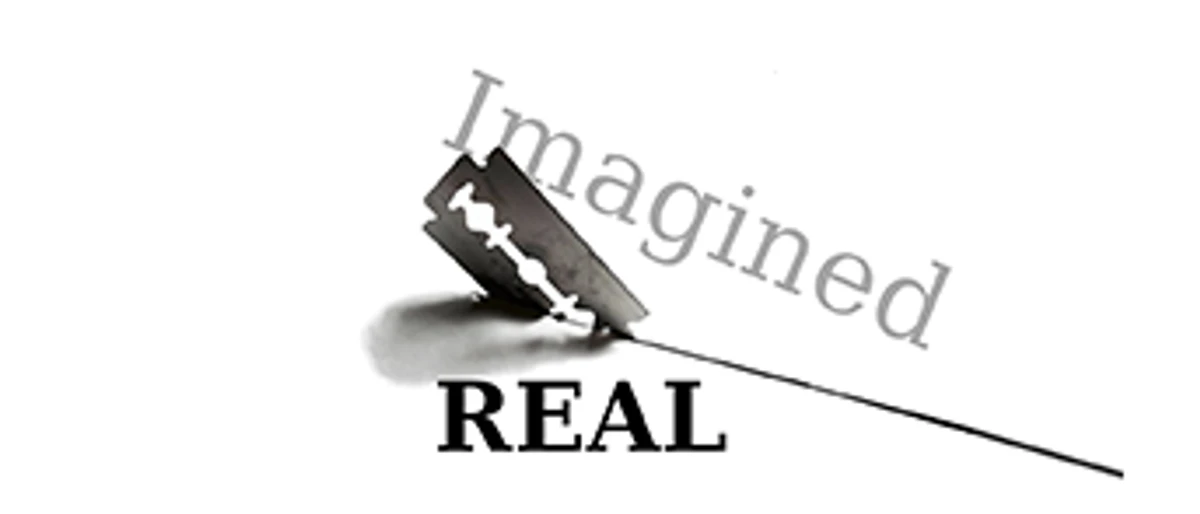
When you hear hoofbeats, think horses, not zebras. When two explanations fit the facts equally well, the simpler one is more likely to be correct. This principle — simple, ancient, and consistently validated — cuts through the complexity and noise that surrounds most decisions and diagnoses. Occam's Razor has been a cornerstone of scientific and philosophical reasoning for 700 years because it works. Understanding why it works, and when it doesn't, is one of the most practical thinking upgrades available.
What Is Occam's Razor?
Occam's Razor is the principle that, among competing explanations or hypotheses that equally fit the available evidence, the one with the fewest unnecessary assumptions should be preferred. It is sometimes stated as "the simplest explanation is usually correct" — a reasonable approximation, though the precise formulation matters. The principle doesn't say simpler explanations are always correct. It says that, all else being equal, simpler explanations are more likely to be correct — and that complexity should only be added when the evidence requires it.
The Latin formulation most associated with the principle is entia non sunt multiplicanda praeter necessitatem — "entities must not be multiplied beyond necessity." This is a principle of ontological economy: don't introduce more components, causes, mechanisms, or explanatory entities than are needed to account for the observed facts.
The Core Principle in Practice
You come home to find your front door open. Two explanations:
Explanation A: You forgot to close it when you left this morning.
Explanation B: A sophisticated burglar picked your lock, found nothing worth stealing, carefully replaced everything, and left the door open as a calling card.
Both explanations are consistent with the observable fact (open door). Explanation A requires one assumption: that you were forgetful. Explanation B requires six or seven assumptions: that there was a burglar, that they had lock-picking skills, that they found nothing, that they bothered to replace things, and that they chose an unusual exit strategy. Occam's Razor says to start with Explanation A — not because burglaries are impossible, but because multiplying assumptions without evidence is epistemically unjustified.
The "razor" metaphor refers to the act of shaving away unnecessary assumptions — cutting the explanatory excess down to only what the evidence actually requires. Like a literal razor, the tool doesn't do the thinking for you. It's an instrument of analysis that requires judgment about what counts as "necessary" and what counts as "excess."
William of Ockham and the Original Principle
William of Ockham was a 14th-century English Franciscan friar and philosopher — one of the most significant logicians and theologians of the medieval period. The principle named after him appears in various forms throughout his work, though the exact Latin formulation most commonly cited is actually a later synthesis of his views rather than a direct quote.
Ockham's concern was primarily theological and metaphysical: he was skeptical of the elaborate ontological frameworks his predecessors had constructed, filled with abstract entities and theoretical intermediaries that seemed to exist primarily to explain other theoretical entities rather than to account for observable reality. His principle was a methodological corrective — a call to pare back explanatory frameworks to what was actually needed.
The principle was not original to Ockham. Aristotle had articulated similar ideas in his Posterior Analytics ("we may assume the superiority, all else being equal, of the demonstration which derives from fewer postulates"). Ptolemy applied it to astronomy. Aquinas used it in theological argument. What Ockham did was make it explicit and central to his methodology — applying it more consistently and more aggressively than his contemporaries — which is why his name became attached to it.
Newton's Formulation
"We are to admit no more causes of natural things than such as are both true and sufficient to explain their appearances."
Newton's first rule of reasoning in natural philosophy — from the Principia Mathematica — is a precise scientific restatement of Occam's Razor. Newton's entire approach to physics was organized around this principle: find the smallest number of foundational laws that account for all observed phenomena. Three laws of motion and one law of gravitation accounted for everything from falling apples to planetary orbits. The simplicity was not a constraint he imposed — it was the result he found when he insisted on using only what was necessary.
Why Simpler Explanations Usually Win
Occam's Razor is not just a stylistic preference for elegant theories. There are substantive reasons why simpler explanations tend to be more accurate, and understanding those reasons makes the principle more useful and its limitations more visible.
Probability and Conjunctions
Every additional assumption in an explanation is an additional factor that must be true for the explanation to be correct. In probability terms, the probability of a conjunction — all of several independent events being true — is the product of their individual probabilities. If each assumption has a 90% probability of being correct, two assumptions together have 81% probability, three have 73%, five have 59%, and ten have only 35%.
Complex explanations require more assumptions. More assumptions means more components that must all be simultaneously true. The probability that all of them are correct decreases with each addition. This is the mathematical foundation of Occam's Razor: simpler explanations have fewer conjunctions and thus higher baseline probability, all else being equal.
Overfitting: When Complexity Fits the Past but Fails the Future
In statistics and machine learning, "overfitting" occurs when a model is made so complex that it fits the specific data it was trained on perfectly — including the noise and random variation — but performs poorly on new data. A simple model that captures the underlying signal generalizes well; a complex model that captures every wrinkle in the training data fails on anything it hasn't seen before.
The same phenomenon occurs in human reasoning. An overly complex explanation may fit all the known facts precisely while being wrong — because it has been constructed to fit the facts rather than to identify the underlying reality. Simple explanations are more likely to identify genuine causal mechanisms rather than post-hoc rationalization of observed data.
The Predictive Test
The most useful test of any explanation — simple or complex — is its predictive power. Does it correctly predict new observations that weren't available when the explanation was constructed? A complex explanation built around known data may fit perfectly; a simple explanation built around genuine mechanisms will tend to generalize better to novel cases. When evaluating competing explanations, ask not just "which one fits what I know?" but "which one will be right about what I don't know yet?"
Falsifiability and Testability
Simple explanations tend to make fewer auxiliary assumptions, which means they make more specific predictions and are easier to falsify — to test against evidence that could prove them wrong. Highly complex explanations often incorporate enough degrees of freedom that they can be adjusted to accommodate almost any new evidence, making them effectively unfalsifiable.
Karl Popper's philosophy of science is built on this insight: the mark of a genuinely scientific theory is not that it can be confirmed by evidence but that it can be falsified by it. Simple theories that make specific, testable predictions are more scientifically valuable than complex theories that can explain anything after the fact. This is Occam's Razor elevated to a principle of scientific methodology.
Occam's Razor in Science
The history of science is substantially a history of simpler explanations replacing complex ones — not because scientists prefer simplicity aesthetically, but because simpler explanations turned out to predict reality more accurately.
Heliocentrism vs. Ptolemaic Epicycles
The Ptolemaic geocentric model of the solar system was extraordinarily complex: to account for the observed movements of planets, it required not just circles but circles within circles (epicycles), and eventually epicycles within epicycles. The model fit the available data reasonably well — but required an elaborate and mathematically cumbersome apparatus of 80 or more circular motions.
Copernicus's heliocentric model initially fit the data about as well as Ptolemy's but required dramatically fewer components — the sun at the center, planets in orbit, simple circles or ellipses. Occam's Razor suggested that the simpler model deserved preference when predictive accuracy was approximately equal. Subsequent refinements confirmed that heliocentrism was not just simpler but genuinely more accurate.
Evolution by Natural Selection
The diversity of life on Earth had been explained by a variety of complex frameworks — divine creation with separate species, panspermia, vitalism — each requiring substantial additional assumptions. Darwin's natural selection required only three: heritable variation exists, variation affects survival and reproduction, offspring inherit traits from parents. From these three simple mechanisms, the entire complexity of the biosphere follows. The theory was not accepted immediately, but its parsimony relative to the explanatory burden it carried was striking from the beginning.
Einstein and the Simplicity of Relativity
Special relativity, which seems counterintuitive and mathematically sophisticated, was in an important sense simpler than the theories it replaced. The ether theory of electromagnetic propagation required elaborate additional mechanisms to explain why the speed of light was constant regardless of the observer's motion. Einstein's resolution — assume the speed of light is constant and derive the consequences — eliminated those mechanisms entirely. One clean assumption replaced a tangle of epicycle-like theoretical constructions.
Medicine: The Diagnostic Application
Medical diagnosis is one of the most practically important applications of Occam's Razor. The principle has a direct clinical formulation: "When you hear hoofbeats, think horses, not zebras" — a teaching aphorism attributed to Theodore Woodward at the University of Maryland School of Medicine in the late 1940s. The horse/zebra distinction captures the diagnostic application precisely: common explanations should be considered before rare ones, even when both are technically consistent with the symptoms.
The Ockham principle in diagnosis goes further: prefer the single diagnosis that accounts for all the patient's symptoms over multiple separate diagnoses for different symptoms. If a patient presents with fatigue, joint pain, and a rash, the question is whether there is one underlying condition that produces all three — before assuming three separate conditions. A single unifying diagnosis is preferred over multiple separate ones, not because it's always right, but because it's more parsimonious and the search for a unifying explanation tends to find real causal connections that separate diagnoses would miss.
When Zebras Are the Right Answer
Medical training specifically teaches residents to recognize when the zebra is the correct diagnosis — when the constellation of symptoms is unusual enough that a rare explanation becomes more probable than multiple coinciding common ones. A patient presenting with the combination of certain symptoms may have a higher probability of a rare unifying condition than of three common conditions occurring simultaneously. The principle is not "always think horses" — it's "start with horses, and move to zebras only when the evidence requires it." This is the correct application of Occam's Razor: parsimony as default, with complexity added only when simple explanations genuinely fail.
The diagnostic application connects directly to the second-order thinking framework: a diagnosis is not just a label — it's a prediction about what will happen next and what treatment will work. A parsimonious diagnosis that correctly identifies the underlying mechanism will make better predictions than a complex multi-diagnosis that fits current symptoms but misidentifies the causal structure.
Applying Occam's Razor to Everyday Decisions
The principle translates directly to personal decision-making in several practically important ways.
Interpreting Other People's Behavior
When someone does something that affects you negatively — a colleague doesn't respond to an email, a friend cancels plans, a manager gives critical feedback — there are typically two broad categories of explanation: simple explanations involving ordinary human behavior (they were busy, something came up, they had a legitimate concern) and complex explanations involving deliberate intent or hidden motives (they're ignoring you strategically, they're avoiding you, they're undermining you).
Occam's Razor applied here: start with the simple explanation. The complex explanation requires multiple additional assumptions about hidden motives, strategic behavior, and sustained deliberate intent — all of which need to be justified by evidence before they're warranted. Most interpersonal conflicts that escalate do so because one or both parties adopts a complex, conspiratorial explanation for behavior that a simpler explanation would have resolved. This is closely related to Hanlon's Razor — "never attribute to malice what can adequately be explained by stupidity" — which is itself a specific application of Occam's principle to human behavior.
Problem Diagnosis
When something goes wrong in a system — a project fails, a product underperforms, a relationship deteriorates — the initial impulse is often to construct elaborate explanations involving multiple interacting causes. Occam's Razor suggests starting with the simplest possible causal explanation: what single factor, if present, would account for all the observed problems? Finding that single factor is both more parsimonious and, if successful, more actionable than attempting to address a complex multi-causal web simultaneously.
Action Steps
- State the problem precisely. What exactly is happening that shouldn't be? The more precisely the problem is stated, the easier it is to identify parsimonious explanations.
- List the simplest possible single-cause explanations first. What one thing, if true, would explain all of what you're observing? Start here before adding complexity.
- Test the simplest explanation against all available evidence. Does it fit everything you know, or does it require ignoring some facts? If it fits, proceed. If it doesn't fit some facts, add exactly as much complexity as those facts require.
- Add complexity only when evidence demands it. Each additional causal factor should be added only when the simpler explanation has been genuinely ruled out — not because a more complex explanation is possible, but because the simpler one is insufficient.
- Prefer the explanation that makes specific predictions. The better explanation is the one that predicts what you'll find when you look further — not the one that retrospectively fits what you already know.
Decision Simplification
Complex decisions often look complex because they're framed too elaborately. Occam's Razor applied to decision-making: what is the actual choice being made, stripped of all the complexity that's been added around it? The value of simplifying the frame is that it reveals whether the complexity is load-bearing — genuinely necessary to make the right decision — or merely accumulated without serving the decision's purpose.
Many decisions that feel overwhelmingly complex become clear when reduced to their essential components. The complexity was in the framing, not in the choice itself. This connects to first principles thinking — the same move of stripping away accumulated assumptions to find the genuine structure of a problem.
Occam's Razor in Business and Strategy
Business strategy has a well-documented tendency toward complexity — elaborate frameworks, multi-variable models, sophisticated analyses that obscure rather than illuminate the fundamental decisions that actually determine outcomes. Occam's Razor provides a useful corrective.
The Simplest Viable Strategy
Richard Rumelt, in his landmark work on strategy, identifies "bad strategy" as strategy that substitutes length, complexity, and the appearance of sophisticated analysis for the genuine identification of a few critical choices. Good strategy, by contrast, is characterized by parsimony: a clear diagnosis of the challenge, a guiding policy that addresses it, and a coherent set of actions that implement the policy. This is Occam's Razor applied to strategic planning — find the simplest framework that genuinely explains the competitive situation and prescribes a course of action.
Complexity Theater in Business
Elaborate strategy documents, multi-year plans with dozens of strategic pillars, mission/vision/values frameworks nested inside balanced scorecards — these often represent complexity theater: the appearance of sophisticated analysis that substitutes for the actual hard work of identifying the one or two things that genuinely determine success or failure in a specific competitive situation.
The razor: if you can't state your strategy in two or three sentences that make specific predictions about what will work and why, the strategy is probably not actually providing direction.
Amazon's Two-Pizza Teams
Jeff Bezos's organizational principle — teams small enough to be fed by two pizzas — is an application of Occam's Razor to organizational design. The simplest team structure that can execute a specific function is preferred over larger, more complex structures. Complexity in organization requires justification; simplicity is the default.
The same principle drove Amazon's API mandate (2002): all internal services must communicate through APIs, with no exceptions. One simple rule that forced architectural simplicity across the entire company.
Product Design: Simplicity as Feature
The most successful consumer products in recent decades share a common characteristic: they do fewer things than competitors but do those things dramatically better. The iPod played music. Google searched. The original iPhone was a phone, an iPod, and an internet communicator. Each was simpler than alternatives — not because simplicity was the design aesthetic, but because ruthless Occam's Razor application during design eliminated everything that wasn't essential to the core function.
The product design application is closely related to the Pareto principle: 20% of features account for 80% of usage. Occam's Razor says to build the vital 20% excellently rather than diluting resources across the trivial 80%. The result is a simpler product that outperforms complex alternatives for the uses that actually matter.
When Occam's Razor Fails
Occam's Razor is a heuristic, not a law. It guides the starting point of analysis — prefer simple explanations, add complexity only when evidence requires it — but it cannot guarantee that the simplest explanation is always correct. Understanding when it fails is essential to using it well.
When Reality Is Genuinely Complex
Some phenomena are genuinely complex, and the simplest possible explanation is wrong because the reality it's trying to describe is not simple. The economy, climate systems, ecosystems, and human psychology are all genuinely complex — they involve many interacting variables in non-linear relationships, and simple explanations systematically fail to account for them. In these domains, Occam's Razor still applies — add no more complexity than necessary — but "necessary" may require more components than feels comfortable.
Einstein reportedly said that everything should be made as simple as possible, but not simpler. The "but not simpler" is doing important work. Oversimplification is a failure mode as real as overcomplexity. A model that is too simple will systematically misfits reality — not because it has too many assumptions but because it has too few.
Einstein's Corollary
"Everything should be made as simple as possible, but not simpler."
This formulation is sometimes misattributed to Einstein, but regardless of origin, it captures the essential limit of Occam's Razor: simplicity is a goal up to the point where it compromises accuracy. The razor shaves unnecessary complexity; it does not shave necessary complexity. The art lies in distinguishing the two — which requires domain knowledge and judgment that the principle itself cannot supply.
When the Simple Explanation Is Motivated
"The simplest explanation" can be manipulated by motivated reasoning. Someone who wants to reach a particular conclusion will find that the "simplest" explanation that fits the evidence happens to be the one that supports their preferred conclusion. This is Occam's Razor weaponized — using the principle to justify choosing the preferred simple explanation over more complex alternatives that might be more accurate.
The guard is the same as for any analytical principle: seek disconfirming evidence, apply the principle to alternatives that you're not rooting for, and be skeptical of the "simplest explanation" that happens to be maximally convenient. This is where inversion thinking provides the corrective — ask what the simplest explanation would be if you were trying to argue the opposite conclusion.
When Pattern Matching Generates False Simplicity
Human pattern recognition is powerful but error-prone. We often perceive a "simple explanation" because it fits a familiar pattern — but the familiar pattern is an analogy imported from elsewhere, not a genuine causal analysis of the specific situation. The explanation feels simple because it requires no new thinking, but its simplicity is borrowed rather than earned. This is one reason why diverse expertise and cross-disciplinary thinking are valuable: they surface explanations that feel complex to pattern-matchers in a single domain but are actually more parsimonious from a broader perspective.
Mastering the Principle of Parsimony
Occam's Razor is ultimately a discipline of intellectual honesty — the commitment to not claim more than the evidence warrants, to not construct elaborate explanations when simpler ones are sufficient, and to add complexity only when reality demands it rather than when it makes an argument more impressive or a theory more comprehensive.
The Practice of Assumption Auditing
Regularly audit the explanations and models you use for important decisions: how many assumptions does each one require? Which of those assumptions are actually necessary — supported by evidence that would be absent if the assumption were wrong? Which are comfortable additions that feel explanatory but could be removed without changing the prediction?
The assumptions that survive this audit are the ones worth keeping. The rest can be shaved off with the razor, not because they're certainly wrong but because they're not earning their place in the model.
Default to Simple, Escalate with Evidence
Make simplicity the default and complexity the exception. Start every explanation, every strategy, every model at the minimum viable level of complexity and add components only when specific evidence requires them. This discipline runs against the natural tendency to add complexity as a hedge — to build in more mechanisms, more factors, more contingencies "just in case" — but the hedge typically doesn't improve accuracy, it just makes the model harder to test and falsify.
The Integration with Other Thinking Tools
Occam's Razor works best as part of an integrated toolkit rather than in isolation. Combined with first principles thinking — which strips explanations down to genuine causal foundations — it prevents the accumulation of theoretical overhead. Combined with circle of competence awareness — it helps distinguish when apparent simplicity reflects genuine understanding versus ignorance of relevant complexity. Combined with second-order thinking — it prevents the overcorrection of making explanations so simple that their downstream implications are wrong.
The Fundamental Insight
The deepest value of Occam's Razor is not as a tool for finding correct explanations — it's as a tool for intellectual humility. The principle is a constant reminder that explanation is not the same as understanding, that complexity can substitute for insight rather than producing it, and that the goal of reasoning is accurate prediction rather than impressive theory-building. The scientist, the clinician, the strategist, and the everyday decision-maker all benefit from the same discipline: claim no more than you can justify, build no more than you need, and remain genuinely open to revising your explanation when new evidence demands it. That discipline, practiced consistently, produces not just better individual conclusions but a qualitatively better relationship with uncertainty and knowledge — which is, in the end, what good thinking is for.


